

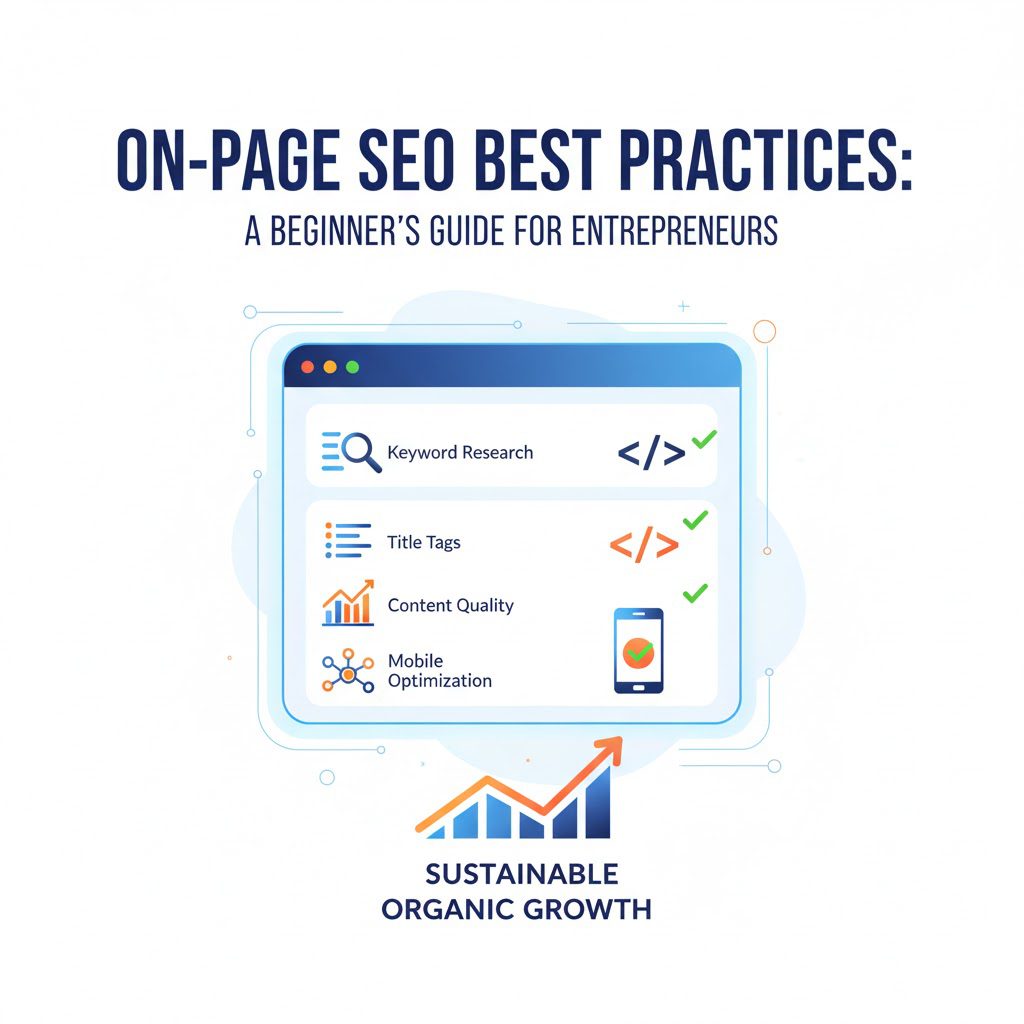
On-page SEO represents the elements you directly control on your website to improve search engine rankings.
What is On-Page SEO and Why Does It Matter?
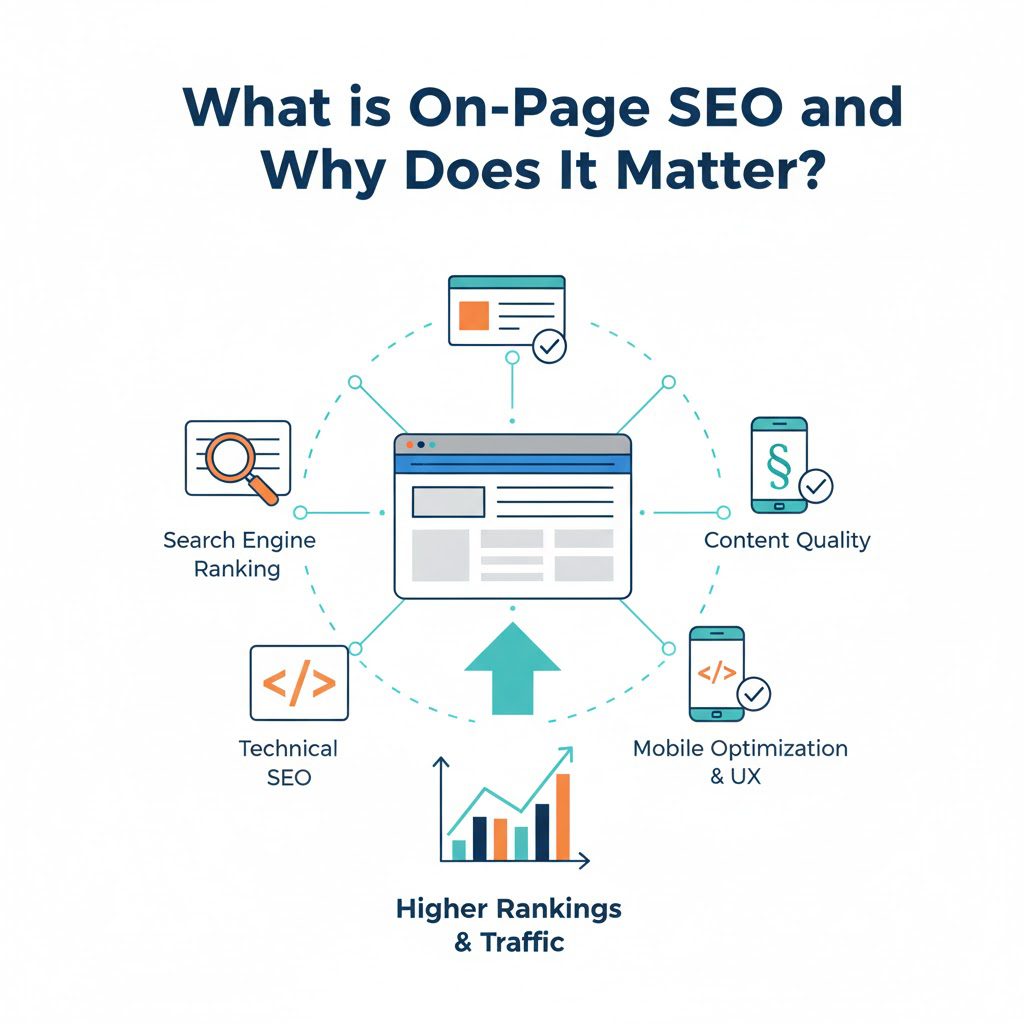
On-page SEO encompasses all optimization tactics applied directly to your website’s pages to improve their search engine rankings and user experience. This includes content quality, HTML tags, internal linking, page structure, and technical elements that signal relevance and authority to search engines.
The importance of on-page SEO cannot be overstated. While Google considers over 200 ranking factors, on-page elements form the foundation that determines whether your pages can rank at all. A perfectly optimized page with strong on-page SEO can outrank competitors with more backlinks but weaker on-page signals.
For entrepreneurs, on-page SEO offers several critical advantages. First, it requires minimal budget—you only need time and knowledge. Second, you maintain complete control without depending on third parties. Third, on-page improvements deliver quick wins, often showing ranking improvements within weeks rather than months required for link building campaigns.
Keyword Research and Strategic Targeting.
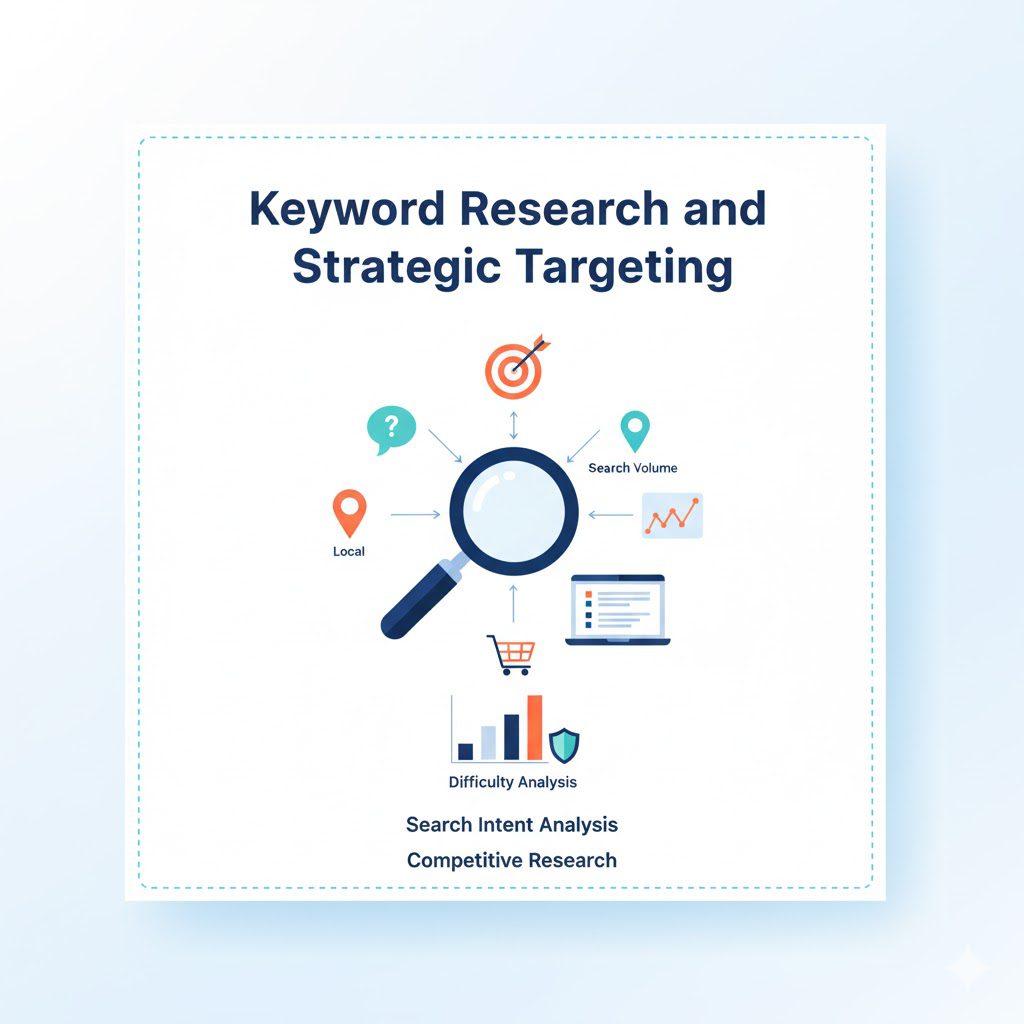
Before optimizing any page, you must understand what keywords your target audience actually searches for. This research phase determines your entire on-page strategy and prevents wasted effort on terms that don’t drive business results.
Keyword Difficulty Analysis
- Not all keywords are created equal. A keyword with 10,000 monthly searches might seem attractive, but if the top 10 results are all from major corporations with massive authority, your chances of ranking are minimal.
- Evaluate keyword difficulty by examining the current top-ranking pages:
- Domain authority of ranking sites (use Moz or Ahrefs)
- Content quality and comprehensiveness
- Number of referring domains
- Content length and depth
- Publication dates (newer content in competitive niches signals opportunity)
- Entrepreneurs should target keywords where at least 2-3 of the top 10 results come from websites with similar or lower authority than your own.
Title Tag Optimization: Your First Impression
The title tag is arguably the single most important on-page SEO element. It appears as the clickable headline in search results and tells both users and search engines exactly what your page is about.
Crafting Perfect Title Tags
Follow these title tag best practices:
Length Matters: Keep titles between 50-60 characters (approximately 580 pixels) to prevent truncation in search results. While Google sometimes displays longer titles, staying within limits ensures your full message appears.
Front-Load Keywords: Place your primary keyword as close to the beginning as possible. “On-Page SEO Best Practices for Beginners” outperforms “The Ultimate Beginner’s Guide to Best Practices in On-Page SEO” because the target keyword appears immediately.
Include Modifiers: Words like “best,” “guide,” “checklist,” “2025,” “tips,” or “review” help capture long-tail variations. “On-Page SEO Best Practices 2025” ranks for both the primary term and long-tail variations like “best on-page SEO practices” and “on-page SEO practices 2025.”
Brand Consistency: Add your brand name at the end, separated by a dash, pipe, or colon. This builds brand recognition: “On-Page SEO Guide | Digitalzila”
Emotional Triggers: Power words create curiosity and urgency. Compare:
- Weak: “Information About On-Page SEO”
- Strong: “Master On-Page SEO: The Definitive 2025 Guide”
Unique Titles: Every page on your site must have a unique title tag. Duplicate titles confuse search engines about which page to rank and dilute your ranking potential.
Testing and Optimization
Use Google Search Console to monitor click-through rates for your top-ranking pages. If a page ranks in positions 1-5 but has a CTR below 3%, your title tag likely needs improvement. Test variations focusing on:
- Different keyword positions
- Adding numbers or brackets “[Updated 2025]”
- Stronger power words
- Clearer value propositions
Meta Description Optimization
While meta descriptions don’t directly impact rankings, they significantly influence click-through rates, which do affect rankings. A compelling meta description can double your traffic from the same ranking position.
Writing Irresistible Meta Descriptions
Best practices include:
Optimal Length: Aim for 150-160 characters. Longer descriptions get cut off, while shorter ones waste valuable space to persuade users.
Include Primary Keyword: While not a ranking factor, keywords in meta descriptions appear bolded in search results, increasing visibility and relevance perception.
Compelling CTAs: Tell users exactly what action to take: “Learn,” “Discover,” “Get,” “Download,” “Start,” or “Master.” Active verbs create urgency.
Highlight Unique Value: What makes your content different or better? Mention specific benefits, unique data, or exclusive insights:
Weak: “This article discusses on-page SEO techniques for websites.” Strong: “Discover 15 proven on-page SEO techniques that increased our client’s traffic by 312% in 90 days. Step-by-step beginner’s guide with real examples.”
Create Urgency: Time-sensitive language encourages immediate clicks: “Updated for 2025 algorithm changes” or “Limited-time framework revealed.”
Avoid Duplicate Descriptions: Like title tags, every page needs a unique meta description. Template-based descriptions waste this valuable real estate.
Header Tag Hierarchy and Structure
Headers (H1, H2, H3, H4, H5, H6) serve dual purposes: they help search engines understand your content structure and improve readability for users. Proper header hierarchy signals topical relevance while creating a logical flow that keeps readers engaged.
H1 Tag Strategy
Every page should have exactly one H1 tag that serves as the main headline. This H1 should:
- Include your primary keyword naturally
- Accurately describe the page content
- Entice readers to continue
- Stay under 70 characters when possible
The H1 doesn’t need to match your title tag exactly. In fact, slight variations can help you rank for related keywords:
- Title Tag: “On-Page SEO Best Practices: Beginner’s Guide for Entrepreneurs”
- H1: “Master On-Page SEO: Essential Best Practices Every Entrepreneur Needs”
H2, H3, and Supporting Headers
Structure your content with H2 tags as main section headers covering major topics. These should:
- Include secondary keywords where natural
- Present clear, specific topics
- Follow logical progression
- Promise value to readers
Use H3 tags for subsections under each H2, and H4+ tags for further subdivisions. Maintain consistent hierarchy—never skip levels (don’t jump from H2 to H4).
Example structure:
H1: On-Page SEO Best Practices for Entrepreneurs
  H2: Keyword Research Fundamentals
    H3: Understanding Search Intent
    H3: Finding Target Keywords
  H2: Title Tag Optimization
    H3: Crafting Perfect Titles
    H3: Testing and Improvement
This structure helps both search crawlers and readers quickly grasp your content organization.
Content Quality and Depth
Content quality represents the most critical on-page ranking factor. Google’s algorithms have become remarkably sophisticated at evaluating content value, making it virtually impossible to rank with thin, low-quality content in competitive niches.
The E-E-A-T Framework
Google evaluates content quality using the E-E-A-T guidelines:
Experience: Does the author demonstrate first-hand experience with the topic? Include personal anecdotes, case studies, original research, or practical examples from your work.
Expertise: Does the author have relevant credentials, training, or knowledge? Add author bios highlighting qualifications, display credentials prominently, and contribute to authoritative publications.
Authoritativeness: Is the website recognized as a go-to resource for this topic? Build authority through consistent publishing, earning backlinks from reputable sources, and establishing thought leadership.
Trustworthiness: Can readers trust the information and the website? Display clear contact information, implement HTTPS, maintain accurate information, cite authoritative sources, and showcase customer testimonials.
Content Depth and Comprehensiveness
Analysis of millions of search results reveals that top-ranking content tends to be comprehensive and thorough. For competitive keywords:
- Blog posts: Aim for 1,500-2,500 words minimum
- Definitive guides: Target 3,000-5,000+ words
- Product/service pages: 1,000-1,500 words with detailed descriptions
However, length alone doesn’t guarantee rankings. Content must provide genuine value and thoroughly address the topic. Focus on:
- Answering all relevant questions readers might have
- Providing actionable advice and examples
- Including original insights or perspectives
- Covering topics competitors miss
- Organizing information logically
Content Freshness
Google values fresh, updated content. Implement a content update strategy:
- Review top-performing posts quarterly
- Add new sections covering recent developments
- Update statistics and examples with current data
- Refresh screenshots and images
- Note update dates prominently
Updated content often receives ranking boosts and can recapture lost positions.
Keyword Optimization and Density
Strategic keyword placement helps search engines understand your content relevance without compromising readability. The key is natural integration that serves readers first.
Primary Keyword Placement
Include your primary keyword in these critical locations:
- Title tag (preferably at the beginning)
- H1 tag
- First 100 words of content
- At least one H2 tag
- URL slug
- Image alt text
- Meta description
- Naturally throughout body content
Keyword Density
Forget outdated advice about 2-3% keyword density. Modern SEO focuses on topical relevance, not keyword frequency. Use your primary keyword naturally where it makes sense, typically 3-7 times per 1,000 words depending on content type.
More importantly, incorporate related terms and synonyms. Google’s semantic understanding recognizes that “SEO optimization,” “search engine optimization,” and “ranking improvement” are related concepts. This semantic richness signals comprehensive topic coverage.
LSI Keywords and Semantic Relevance
Latent Semantic Indexing (LSI) keywords are terms and phrases semantically related to your main keyword. Including LSI keywords helps Google understand your content context and depth.
For a page targeting “on-page SEO,” relevant LSI keywords include:
- Meta tags
- Title optimization
- Header tags
- Internal linking
- Content quality
- User experience
- Page speed
- Mobile optimization
Use tools like LSIGraph or analyze top-ranking competitor pages to identify relevant LSI keywords for your topic.
URL Structure Optimization
Clean, descriptive URLs improve both user experience and search engine understanding. Your URL structure should clearly indicate page hierarchy and content.
URL Best Practices
Keep URLs Short and Descriptive: Aim for 3-5 words that clearly indicate content:
- Good: /on-page-seo-guide/
- Bad: /p=12345 or /articles/2025/01/29/post-about-seo-things/
Include Primary Keyword: URLs containing keywords receive slight ranking boosts and appear more relevant to users:
- Optimized: /on-page-seo-best-practices/
- Missed Opportunity: /beginners-guide/
Use Hyphens to Separate Words: Hyphens are standard URL separators that search engines read as spaces. Never use underscores or spaces:
- Correct: on-page-seo-guide
- Incorrect: on_page_seo_guide or on%20page%20seo%20guide
Avoid Dynamic Parameters: URLs with question marks, session IDs, or multiple parameters create indexation issues:
- Clean: /products/seo-tools/
- Problematic: /products.php?category=15&id=234&session=abc123
Maintain Consistent Structure: Establish a logical URL hierarchy reflecting your site architecture:
/services/
/services/on-page-seo/
/services/technical-seo/
/blog/
/blog/seo-tips/
Use Lowercase Only: URLs are case-sensitive to servers. Stick to lowercase to avoid duplicate content issues.
Handling URL Changes
If you must change a URL, implement a 301 redirect from the old URL to the new one. This preserves link equity and prevents broken links. Never change URLs without redirects unless absolutely necessary.
Image Optimization for SEO
Images enhance user engagement but can slow page speed if not optimized properly. Strategic image optimization balances visual appeal with performance.
Image SEO Best Practices
Descriptive File Names: Name images descriptively before uploading:
- Good: on-page-seo-checklist-infographic.jpg
- Bad: IMG_1234.jpg or screenshot.png
Alt Text Optimization: Alt text serves two purposes—accessibility for screen readers and SEO context. Write descriptive alt text that:
- Describes the image content
- Includes keywords naturally
- Helps visually impaired users understand the image
- Stays under 125 characters
Example: “Entrepreneur reviewing on-page SEO optimization checklist on laptop screen”
Image Compression: Large images dramatically slow page speed. Compress images before uploading:
- Use tools like TinyPNG, ImageOptim, or Squoosh
- Target file sizes under 100KB for most images
- Convert to WebP format for 25-35% smaller file sizes
- Use appropriate dimensions (don’t upload 4000px images displayed at 800px)
Responsive Images: Serve different image sizes for different devices using responsive image techniques (srcset attribute).
Lazy Loading: Implement lazy loading so images below the fold don’t slow initial page load.
Image Schema Markup
Add schema markup to images to help them appear in Google Image search results with enhanced details.
Internal Linking Strategy
Internal links connect your pages, distributing authority across your site while helping search engines discover and understand content relationships. Strategic internal linking is one of the most underutilized on-page SEO tactics.
Internal Linking Best Practices
Link from High-Authority Pages: Pages with the most backlinks and authority should link to important pages you want to rank higher.
Use Descriptive Anchor Text: Anchor text tells search engines what the linked page is about:
- Optimized: “Learn more about on-page SEO techniques”
- Generic: “Click here” or “Read more”
Link to Relevant Content: Every internal link should provide value to readers by directing them to related, helpful content.
Create Content Hubs: Group related content into topic clusters with a pillar page linking to all related articles, and cluster pages linking back to the pillar.
Aim for 3-5 Internal Links per Page: Link naturally throughout content where mentions of related topics occur.
Avoid Over-Optimization: Don’t stuff exact-match keywords in every internal link. Vary anchor text naturally.
Fix Broken Internal Links: Regularly audit for broken links and fix them immediately using tools like Screaming Frog.
Schema Markup and Rich Snippets
Schema markup is structured data that helps search engines better understand your content and can earn rich snippets in search results. Rich snippets include star ratings, FAQ answers, breadcrumbs, product prices, and more.
Essential Schema Types
Article Schema: For blog posts and articles, including headline, author, date published, and featured image.
Local Business Schema: For location-based businesses, including NAP (name, address, phone), hours, and services.
Product Schema: For e-commerce, including price, availability, and reviews.
FAQ Schema: For frequently asked questions, displaying answers directly in search results.
How-To Schema: For step-by-step guides, showing steps in search results.
Review Schema: For product/service reviews, displaying star ratings in SERPs.
Implement schema using JSON-LD format (Google’s preferred method) and validate with Google’s Rich Results Test tool.
Content Formatting for Readability
Even exceptional content fails if readers can’t easily consume it. Optimize content formatting to reduce bounce rates and increase engagement time—both ranking signals.
Formatting Best Practices
Short Paragraphs: Limit paragraphs to 2-3 sentences maximum. Large blocks of text intimidate online readers.
Bullet Points and Lists: Break information into scannable lists. Readers often skim content for key points.
Subheadings Every 300 Words: Use H2-H3 tags frequently to create natural break points.
Bold Important Points: Emphasize key takeaways with bold text (but use sparingly—over-bolding dilutes impact).
White Space: Generous spacing between elements prevents cramped, overwhelming layouts.
Varied Content Types: Include images, videos, infographics, charts, and tables to break up text.
Readable Fonts: Use 16px minimum font size for body text with adequate line spacing (1.5-1.6 line-height).
Contrast: Ensure strong contrast between text and background (avoid light gray on white).
Call-to-Action Optimization
Every page should guide users toward a desired action. Clear, compelling CTAs improve conversion rates and signal to search engines that your content satisfies user intent.
CTA Best Practices
Above the Fold: Include at least one CTA visible without scrolling.
Multiple CTAs: For longer content, include CTAs every 500-700 words.
Clear Value Proposition: Tell users exactly what they get:
- Weak: “Learn More”
- Strong: “Download Free SEO Checklist”
Contrasting Colors: CTAs should visually stand out from surrounding content.
Action-Oriented Language: Use verbs: “Get,” “Start,” “Download,” “Join,” “Discover”
Create Urgency: Add time-sensitive language when appropriate.
Conclusion: Mastering On-Page SEO
On-page SEO gives entrepreneurs complete control over significant ranking factors. By methodically optimizing each element—from title tags to internal linking to content quality—you create a strong foundation that supports all other SEO efforts.
Begin with keyword research to understand your target audience’s search behavior. Then optimize each page element starting with the highest-impact factors: title tags, content quality, and page speed. As you progress, implement advanced tactics like schema markup and strategic internal linking.
Remember that on-page SEO is not a one-time task but an ongoing process. Regularly audit your pages, update content, and refine optimization as search algorithms evolve. Entrepreneurs who consistently apply these on-page best practices build sustainable organic traffic that generates leads and revenue for years to come.

Leave a Reply
You must be logged in to post a comment.